 USA
 Canada
Buying a used robotic milker: questions to ask
A used milking robot is a system, not a single machine. The questions to ask about its history, software, support and installation before you buy.
In this guide
A used robot can bring automatic milking within reach at a lower price than new. But a robot is a system: the milking box, the software, the cow traffic and, above all, the people who keep it running. Ask about all of them before you talk price.
Talk to a local service dealer first
Before you go and see a robot, call the nearest dealer or service technician for that make. Tell them the model and year. Their answers shape everything else.
- Do they still support that model, and will they keep supporting it?
- Are parts readily available?
- Will they take it out, reinstall it and commission it, and what do they charge for that?
- Can the software and its license be transferred to you?
- How far away is their nearest technician, and do they answer calls at night and at weekends?
Questions about the unit
- What is the exact model, the year and the software version?
- How long was it in service, and what do its counters show for hours or milkings?
- Why is it being sold?
- Who serviced it, and can I see the service records?
- Which major parts have been replaced, such as the arm, the teat detection camera or laser, pumps and hoses?
- Was it on a service contract?
- Has it been damaged, flooded or exposed to frost?
See it milk
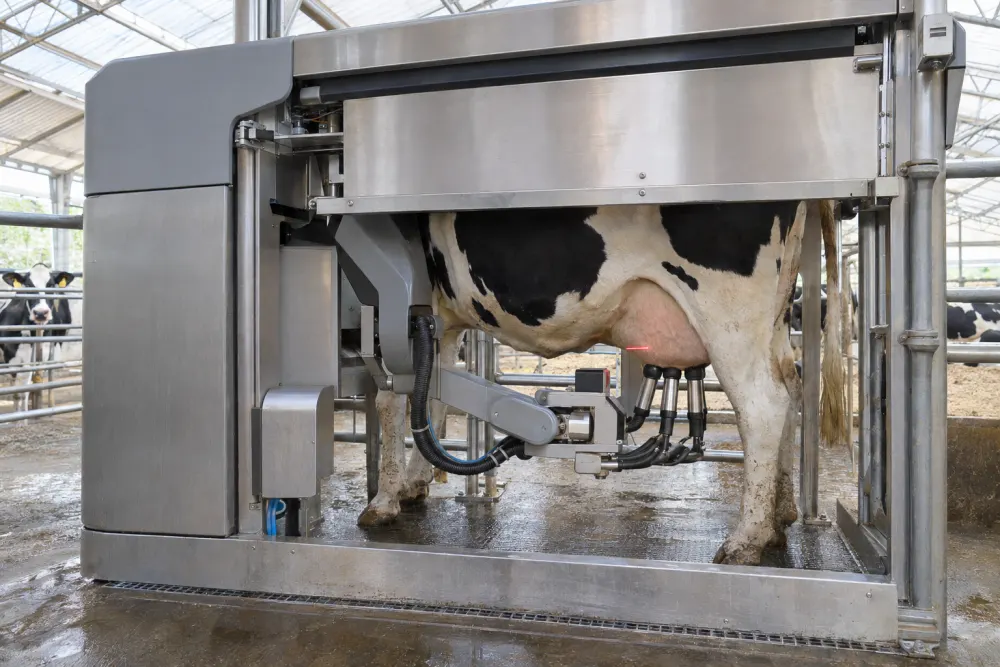
If it is still installed, go and watch it work for a while, ideally with your own technician. Look at how cleanly and quickly it attaches, how often it misses, and how calm the cows are going in and out.
- Ask to see the alarm and error history in the software.
- Ask about milk quality over the past months, and any problems that were traced back to the robot.
- Check the condition of the stall, gates and feed dispenser, not just the arm.
- Look at the surroundings: the compressor, the vacuum pump, the milk line and the wash system.
What is included
Make a written list with the seller of everything that comes with it. Things that are easy to forget:
- Cow ID collars or tags, and the readers.
- The computer, the herd management software and any licenses or subscriptions.
- The compressor, vacuum pump, milk pump and wash system, if they were shared with other equipment.
- Gates, selection boxes and feed stations.
- Spare parts, liners, filters and manuals.
Will it suit your barn?
- Will the box fit where you want it, with room for service access?
- How will cows get to it, and how will you fetch the ones that do not come?
- Ask your dealer how many cows that unit can handle in your setup. It depends on the herd and the barn.
- Check the power, water, drainage, compressed air and internet connection the system needs.
Taking it out and putting it in
Have a trained technician take the robot out. Parts and cables should be labeled and photographed as they come apart. The arm and electronics need protecting from knocks, damp and cold on the trip. Moving and hauling big equipment has more on getting it home, however many kilometres that is.
Budget for reinstallation, commissioning and training as part of the purchase price. Those costs are real, and a robot that is not set up well will not milk well.
Ready to look? Search robotic milkers or post a Wanted ad saying what you are after.
Ready to look?
Search used dairy equipment from farmers across Canada, or post a Wanted ad and let sellers come to you.